How to Plan an Elopement in Banff on Your Own
Legal Disclaimer and Information Currency
Marriage requirements, park rules, and permit details can change frequently. This information is current as of June 10, 2026, and is for informational purposes only. It does not constitute legal advice. Couples should always verify the latest details with the official Alberta government website, Parks Canada, or their chosen registry office before making final plans.
Planning a DIY elopement in the Canadian Rockies is an incredible way to keep your wedding day intimate and personal. Many couples choose to take the reigns because they love the idea of crafting every detail themselves. While all-inclusive Banff elopement packages can certainly take the heavy lifting off your shoulders, some adventurous souls prefer the hands-on approach.
If you are ready to tackle the permits, find your own vendors, and coordinate the timeline, this guide is for you. Here is everything you need to know to plan your own mountain wedding from scratch.
Step 1: Nail Down the Legal Requirements
Before you can say "I do" in front of a glacier, you need to make sure the province of Alberta recognizes your union. Alberta has specific rules that apply to everyone, whether you are a local or traveling from another country.
First, you must obtain an Alberta marriage license. You and your partner must apply for this in person at a registry agent office within the province. There are several registry offices in the area, including one right in the town of Banff. You will need to bring valid government photo ID, such as your passports. The good news is that there is no waiting period, so you can pick up your license and get married on the same day. However, the license is only valid for 90 days.
Second, self-solemnization is not legal in Alberta. You must hire a licensed marriage commissioner or a religious officiant to perform the ceremony. You will also need two witnesses who are at least 18 years old. If you are eloping just the two of you, your photographer and videographer can often act as your witnesses.

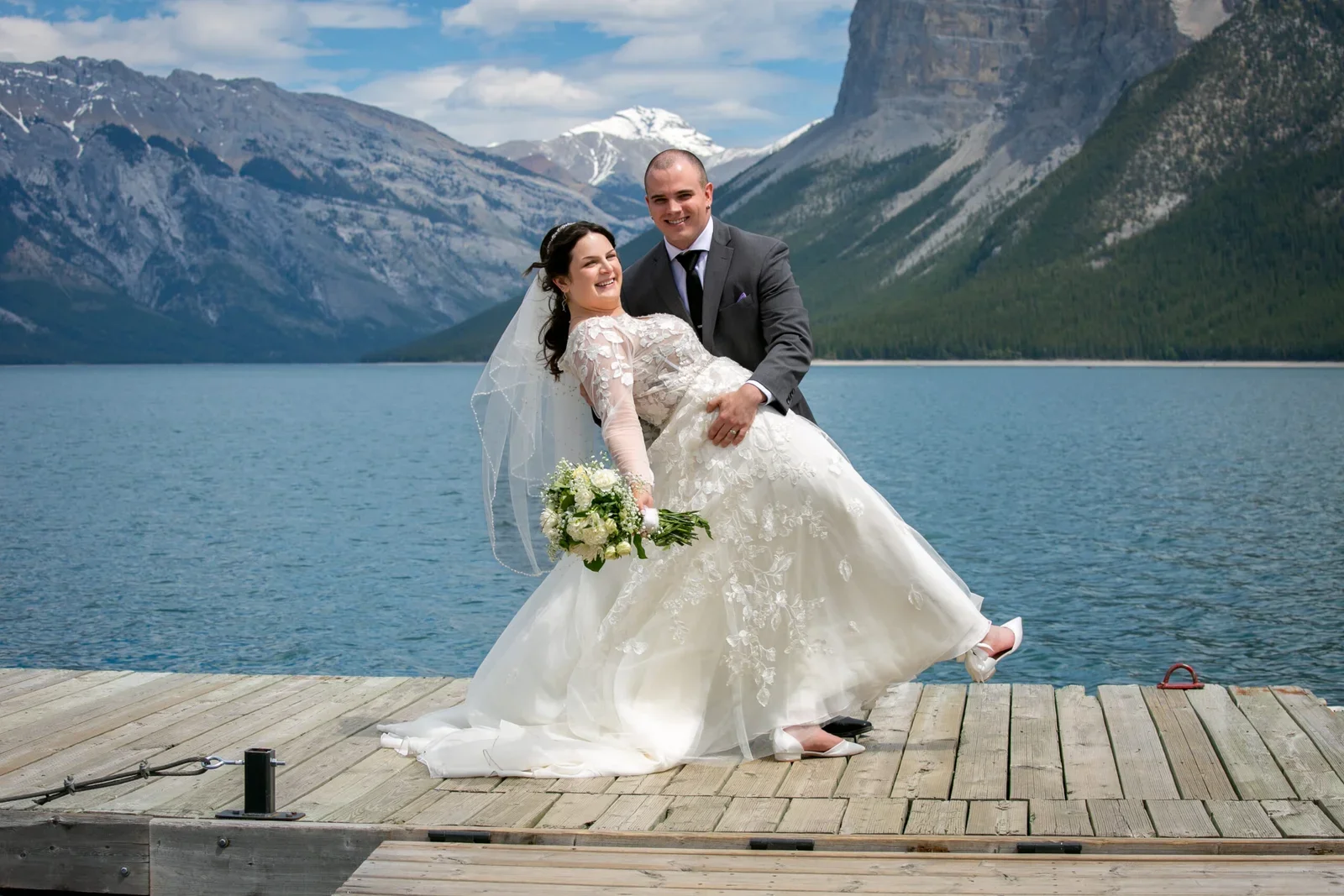
Alt text: Bride and groom embracing during their DIY elopement at Moraine Lake in Banff National Park.
Step 2: Understand Banff National Park Rules
When you plan your own elopement, you become the primary contact for Parks Canada. Most outdoor ceremonies in the park require a wedding registration. This is a simple form that ensures you understand the rules for gathering in a protected wilderness area.
As of our last update, there is no fee for this registration, but there are strict rules you must follow:
- Group Size: Most outdoor locations are limited to a maximum of 20 people. This includes the couple, guests, and all vendors (officiant, photographer, etc.).
- No Exclusive Use: You cannot block off areas or prevent other tourists from accessing the site. You are sharing the beauty of the park with the public.
- Leave No Trace: Throwing confetti, rice, or flower petals is strictly prohibited. You must leave the area exactly as you found it.
- Park Passes: Every person entering the park, including your guests and vendors, must have a valid Parks Canada Discovery Pass or a daily entry pass.
For the most accurate and updated rules on locations and group limits, visit the official Parks Canada wedding page.
Step 3: Create Your DIY Strategy
Staying organized is the key to a stress-free DIY wedding. Since you won't have a coordinator through Tanan Banff Elopements to handle the timeline, you will need to build your own.
DIY Elopement Strategy Checklist
| Category | Task | When to Complete |
|---|---|---|
| Legal | Research Alberta Registry offices and book appointment | 3-6 months before |
| Legal | Hire an Alberta-authorized marriage commissioner | 6-12 months before |
| Park | Submit the Parks Canada Wedding Registration form | 2-4 weeks before |
| Logistics | Purchase Parks Canada passes for all participants | Before arrival |
| Vendor | Hire photographer and videographer with park licenses | 6-12 months before |
| Travel | Book mountain-ready transportation (4x4 recommended) | 6 months before |
| Day-of | Pick up Alberta marriage license in person | 1-2 days before |

Alt text: Two grooms exchanging vows beside a mountain lake as part of an intimate Banff elopement.
Step 4: Selecting Your Location
Choosing a location is the most exciting part of elopement planning. Banff is home to world-famous spots like Lake Louise and Moraine Lake, but these areas can be very crowded. If you want a more private experience, you might consider Lake Minnewanka or Tunnel Mountain Reservoir.
Keep in mind that some locations have seasonal closures. For example, the road to Moraine Lake is typically closed to personal vehicles, requiring you to book a shuttle or a private commercial transport service. When you choose all-inclusive Banff elopement packages, these logistics are often handled for you, but as a DIY couple, you will need to book your shuttle seats well in advance.
Step 5: Vetting Your Independent Vendors
When hiring your own team, you need to ensure every vendor is legally allowed to work within the National Park. Photographers, hair stylists, and makeup artists must hold a valid business license for Banff National Park. If a vendor is caught working without one, it could interrupt your ceremony.
Always ask to see a portfolio of real mountain weddings. The lighting in the Rockies can be tricky, with bright snow and deep shadows from the peaks. You want a Banff wedding and elopement team that understands how to work with the elements.

Alt text: Couple in wedding attire sharing a kiss by the turquoise waters of a Banff lake.
Step 6: Preparing for the Weather
In our experience, mountain weather is unpredictable. It can snow in July and be sunny in October. Always have a "Plan B" location that is sheltered or indoors in case of heavy rain or extreme winds. If you are planning a winter elopement, remind your guests to wear warm layers under their formal attire and choose footwear with good grip.
Many couples find that having a professional team makes these sudden weather changes easier to handle. If you find the DIY logistics are becoming overwhelming, you can always reach out to plan your Banff elopement with professionals who know the area inside and out.
Final Thoughts for the DIY Couple
Planning an elopement on your own is a rewarding challenge. It allows you to have total control over every vendor and every minute of your day. Just remember to stay flexible, keep your paperwork in order, and respect the natural beauty of the park.
Whether you decide to handle every detail yourself or eventually choose to work with a local company for more support, the most important thing is that you and your partner enjoy the journey. The Canadian Rockies provide a backdrop that no traditional venue can match (and the memories will last a lifetime).

Alt text: Newlyweds embracing on a rocky overlook with mountains and a turquoise lake in the distance.